Automated keyword research tools: what to use in 2026
Compare automated keyword research tools for 2026: what they automate, what still needs a human, and which suits an agency or small business.

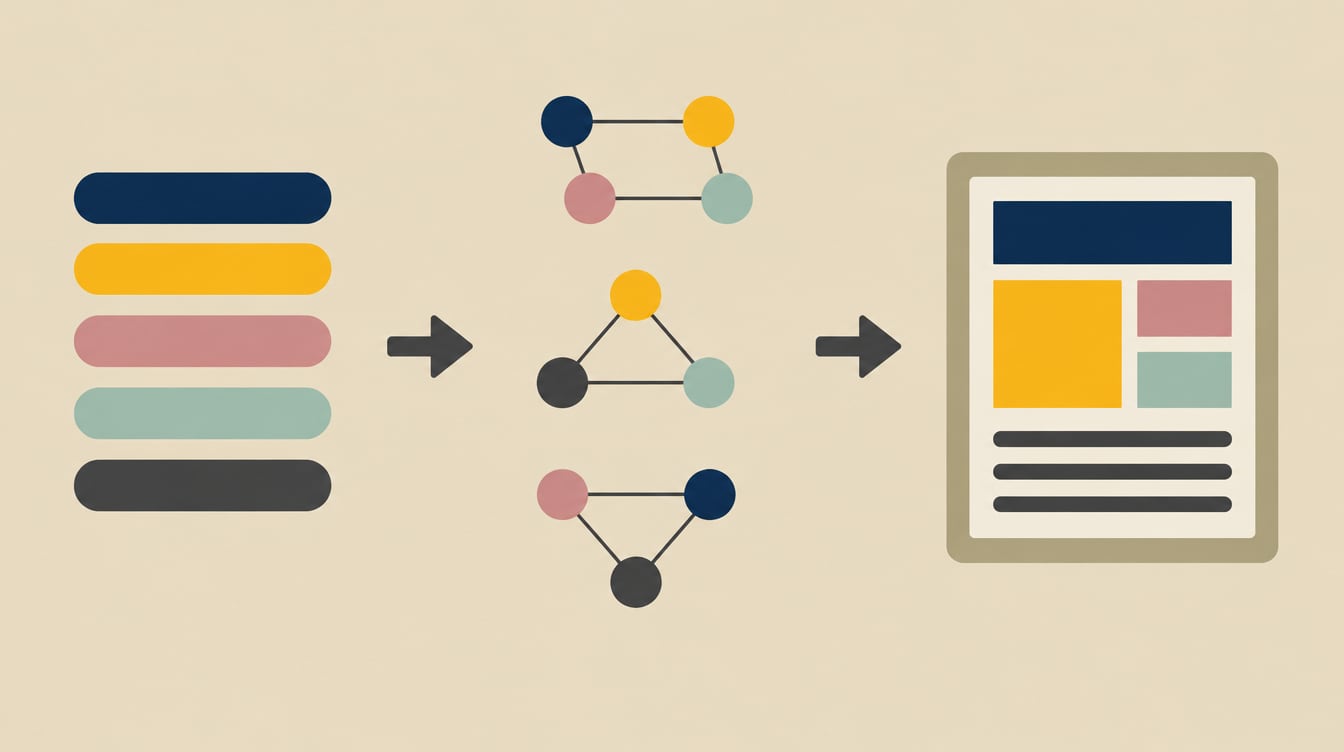
An automated keyword research tool finds keywords, pulls search volume and difficulty, groups terms by intent and flags gaps without manual spreadsheets. Semrush, Ahrefs and SE Ranking suit most teams, Ubersuggest suits tight budgets, and platforms like Rank Otter go further by turning research into published articles.
At a glance
- Rank Otter Growth costs £99 + VAT a month for 30 articles and 1 website; Pro is £199 + VAT for 75 articles and 3 websites; Agency is £449 + VAT for 200 articles and 10 client websites.
- Rank Otter’s first article is free with no card needed, and there is a 30-day money-back guarantee on the first payment.
- Distribb’s 2026 list groups tools by type, including free (Google Search Console), all-in-one suites (Ahrefs, Semrush) and budget options (KeySearch, Mangools). Source: Distribb
- Keyword Insights clusters keywords by SERP similarity to show which pages to create and which topical gaps to fill.
- Google Search Console shows the real queries your site already appears for, free of charge. Source: Digidop
- SEO usually takes three to six months to build, so regular publishing matters more than one perfect post.
What is an automated keyword research tool?
It is software that does the repetitive parts of keyword research for you: discovering terms, pulling volume and difficulty, clustering by intent and spotting competitor gaps. It does not decide which keywords suit your business. That part is still yours.
The five steps that get automated
- Discovery: you enter a seed word or your website and the tool suggests hundreds of related terms.
- Volume: an estimate of how many people search for each term a month.
- Difficulty: a score showing how hard a term is to rank for.
- Clustering: related terms are grouped so one page can target them together.
- Intent: each term is labelled, for example as someone wanting to learn, compare or buy.
What still needs a human
A tool cannot know that a high-volume term brings the wrong kind of customer. You need to choose keywords that fit what you sell, check that the intent label matches what you see in the search results, and judge whether a term is worth money to you. Treat the numbers as a guide, not a verdict.
Research-only tools and tools that publish
Most tools stop at a spreadsheet of keywords. Someone then has to plan, write and publish the content, which is where many teams stall. A smaller group, Rank Otter among them, also writes and publishes the articles. Many suites now add AI-search visibility tracking, which shows whether your brand appears in answers from AI assistants.
What are the best automated keyword research tools in 2026?
Semrush is the all-rounder, Ahrefs is strong for competitor research, SE Ranking offers good value, Ubersuggest suits a tight budget, Keyword Insights is built for clustering and Rank Otter covers research through to publishing.
This comparison is current as at 7 November 2026. Many suites price in US dollars, so UK buyers need to convert to pounds and add VAT. We have not quoted prices we could not verify, so check each tool’s official pricing page, such as Ahrefs or SE Ranking, before you buy. Our own Rank Otter prices are shown in pounds.
| Tool | Type | Best for | Automated features | Free tier | Entry price |
|---|---|---|---|---|---|
| Google Search Console | Free | Real queries your site already gets | Query and click data | Yes, fully free | Free |
| Semrush | All-in-one | All-round SEO teams | Discovery, volume, difficulty, gaps, AI visibility | Limited | Check official pricing page |
| Ahrefs | All-in-one | Competitor research | Discovery, volume, difficulty, gaps | Limited free tools | See the official pricing page |
| SE Ranking | All-in-one | Value for money | Discovery, volume, difficulty, tracking | Trial varies | See the official pricing page |
| Ubersuggest | Budget | Tight budgets | Discovery, volume, difficulty | Limited free searches | See the official pricing page |
| Keyword Insights | Specialist | Clustering and content planning | SERP-based clustering, gap spotting | Check site | See the official pricing page |
| Rank Otter | End-to-end | Research through to published articles | Research from ranking pages, writing, publishing | First article free, no card | £99 + VAT a month (Growth) |
Free: Google Search Console
Best for seeing what you already rank for. Its strength is that the data is real. Its limit is that it cannot show you terms you are not yet appearing for.
All-in-one: Semrush, Ahrefs and SE Ranking
Semrush is best for teams wanting one suite for everything. Ahrefs is best for digging into what competitors rank for. SE Ranking is best when value matters. The strength of all three is depth of data. The limit is the same for each: they hand you a list and leave the writing to you. Distribb’s 2026 roundup is a useful wider list.
Budget: Ubersuggest, KeySearch and Mangools
A good fit for sole traders and small teams. The strength is a low entry cost. The limit is usually smaller databases and fewer advanced features.
Specialist: Keyword Insights
A good fit for planning content. Keyword Insights clusters terms by SERP similarity, which shows which pages to create and which gaps to fill. This one is a planning tool rather than a full research suite.
End-to-end: Rank Otter
A good fit for teams who want articles published, not just a keyword list. The strength is that the research ends in live content. The limit: it’s not a deep data dashboard for browsing keyword metrics.
Which free automated keyword research tools are worth using?
The free basics come from Google Search Console, Google Keyword Planner, Google Trends and Ubersuggest’s free tier, with limits on volume data and depth.

Google Search Console
It shows the real queries your site already appears for, which makes it the most trustworthy data you can get. Start here before you pay for anything.
Google Keyword Planner
Built for pay-per-click advertising, it often shows volumes as ranges rather than exact figures. It’s still handy for finding ideas and comparing terms against each other.
Google Trends
Use it to spot seasonality. If searches for a service peak in spring, you want the article live before then.
Where free tools run out
Free tools struggle with clustering, competitor gaps and working at scale. If you are researching one site and a few dozen topics, they may be enough. Past that, the spreadsheet work eats your week.
How do you choose the right tool for an agency or small business?
Choose by who does the work: an in-house marketer needs data depth, an agency needs multi-site capacity and reporting, and a small business needs research that ends in published content.
Criteria to weigh up
- Budget, including VAT and the exchange rate for dollar-priced tools
- How many websites you manage
- Technical skill in your team
- Integrations with the sites and reports you already use
- Output needed: a keyword list or finished articles
For agencies
Work out the cost per client site, not the headline monthly price. Check how many client websites and how many articles each plan covers, so the per-site sum is easy to do.
For small businesses
Avoid paying for dashboards nobody opens. If nobody on your team has time to turn a keyword list into articles, a research-only suite may sit unused. Look at our small business page if that sounds familiar.
Trial before you commit
Use free tiers and money-back guarantees. Run the tool on one real site for a few weeks and see whether you actually use the output.
Can keyword research be automated all the way to published articles?
Yes. Platforms like Rank Otter research the pages already ranking on Google, write the article and publish it to your site, with you choosing between approving each post or full autopilot.
How it works
- Enter your website and we analyse it free in about 30 seconds.
- Your first article is written free, with no card needed.
- You approve a 30-day plan.
- Articles are researched, written and published on your schedule.
Every article is researched from the pages already ranking on Google before a word is written. You can approve each one or let them publish automatically. You can cancel online in two clicks. See everything on our features page.
Pricing in pounds
Plans are priced in articles a month, not credits or words.
| Plan | Price | Articles a month | Websites |
|---|---|---|---|
| Growth | £99 + VAT a month | 30 | 1 |
| Pro | £199 + VAT a month | 75 | 3 |
| Agency | £449 + VAT a month | 200 | 10 client websites |
The first article is free with no card, and there is a 30-day money-back guarantee on your first payment. Full details are on our pricing page.
Results and who is behind it
Results come from your own Google Search Console, not our estimates. PS Website Design Ltd, a UK web and app development agency that has built and looked after websites for UK businesses since 2009, builds Rank Otter. We use it on our own clients’ websites.
The honest limits
A tool that publishes still needs a sensible topic plan and a human eye. Check that each topic suits your business, that the facts are right for your services and that the tone sounds like you. That is why the approval option exists.
How do you get results from automated keyword research?
Publish consistently on the questions your customers actually ask, expect three to six months for SEO to build, and measure in Search Console. Regular publishing matters more than one perfect post.
Write about real customer questions
High-volume terms are tempting, but the questions customers put to you by phone and email often convert better. Use the tool to size them up, not to replace them.
Use real photos and job stories
Real photos and real job stories beat stock content every time. Add your own to anything a tool drafts for you.
Check robots.txt
Make sure your robots.txt file is not blocking AI search tools. If it is, assistants cannot read the pages you work so hard to publish.
Avoid near-identical town pages
Never publish near-identical pages for different towns. Google treats them as spam. Where you cover several areas, give each page something genuinely local to say. Trades firms can see how we approach this on our trades page.
Review Search Console monthly
Look at which pages are gaining impressions and write more on those topics. That is where the early signs of progress show up.
To see this working on your own site, contact Rank Otter and we will analyse it for free and write your first article with no card needed.
Frequently asked questions
Is there a free automated keyword research tool?
Yes. Search Console, Keyword Planner and Google Trends are free, and Ubersuggest has a limited free tier. They cover the basics but offer less depth for clustering and competitor gaps.
Can AI do keyword research for me?
AI can suggest terms, group them and label intent quickly. It cannot tell which keywords suit your business, so check its suggestions against real search results and your own customer questions.
What is keyword clustering and why automate it?
Clustering groups related keywords so one page can target them together. Automating it saves hours of spreadsheet work and shows which pages you need to create.
How accurate is keyword search volume data?
It is an estimate. Different tools give different figures, and Google Keyword Planner often shows ranges. Use volume to compare terms, not as an exact forecast.
How often should I redo keyword research?
Review Search Console monthly and refresh your wider research every few months, or sooner if your services change. Seasonal businesses should check Google Trends before each peak.
Do I need a paid tool if I have Google Search Console?
Not at the start. Search Console shows the real queries your site already gets. A paid tool helps when you want new topics, competitor gaps and clustering at scale.
How many articles a month do I need to publish for SEO?
There is no magic number. SEO takes three to six months to build, so a steady schedule you can keep up matters more than a burst of posts. Our plans start at 30 articles a month.
Can I automate SEO content for several client websites?
Yes. The Agency plan covers 10 client websites and 200 articles a month for £449 + VAT, and you can choose approval or autopilot for the articles.