What are long tail keywords? Meaning, examples and uses
Long tail keywords are specific search phrases of three or more words. See clear examples, the types, how to find them and how to use them in your content.

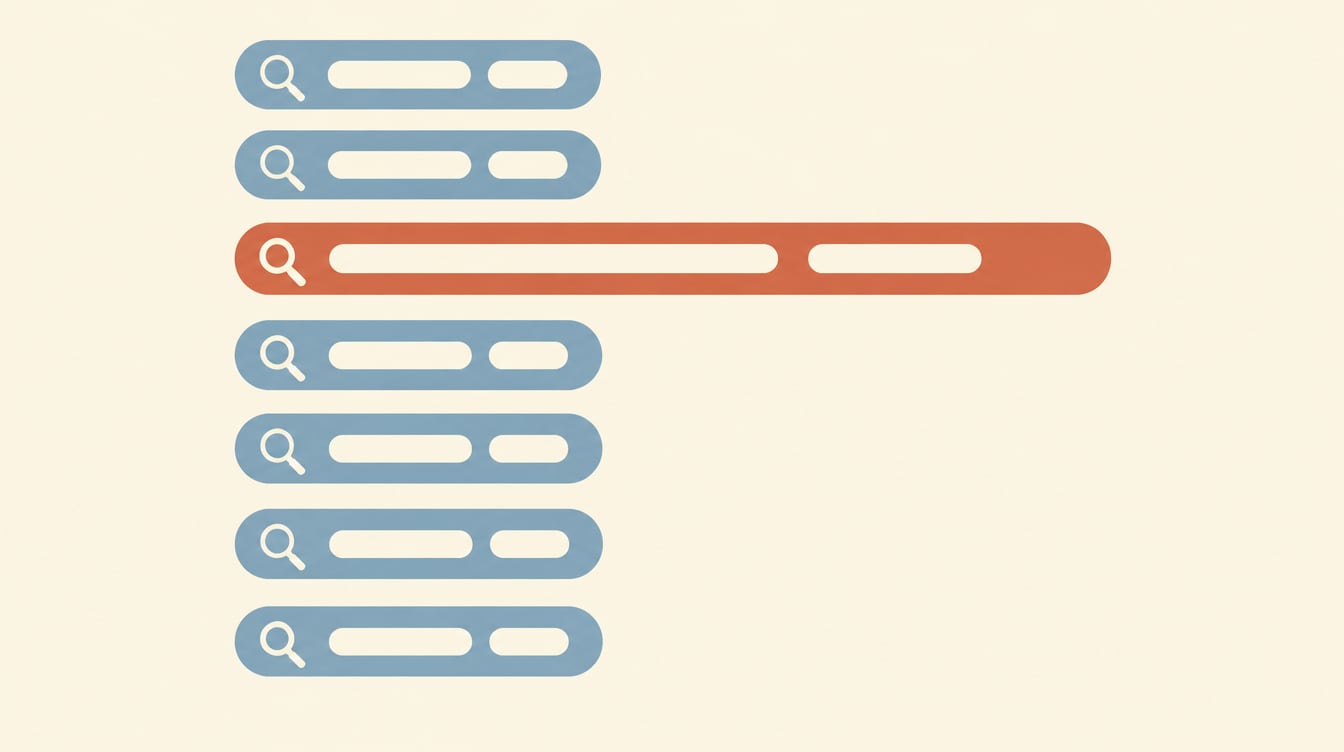
What are long tail keywords? They are specific search phrases, usually three or more words, that describe exactly what someone wants, such as ‘best waterproof walking shoes for wide feet’. They have lower search volume than broad terms but less competition and clearer intent, so they are easier to rank for and more likely to convert.
At a glance
- A long-tail keyword is usually a phrase of three or more words aimed at a specific need, as HubSpot explains.
- The name comes from the shape of a search demand graph: a few popular head terms, then a long tail of many specific, lower-volume searches.
- Ahrefs splits long-tail keywords into three types: supporting, topical and conversational.
- The four main search intents are informational, navigational, commercial and transactional.
- SEO usually takes three to six months to build, so regular publishing matters more than one perfect post.
What are long tail keywords?
Long tail keywords are specific phrases of three or more words that match a particular need. They get fewer searches than broad terms, but fewer sites compete for them and the person searching knows what they want.
Take the word ‘shoes’. It is broad, hugely competitive and tells you almost nothing about the searcher. Now compare ‘best running shoes for flat feet’. Fewer people type it, but everyone who does has a clear problem and is close to making a choice.
A UK example makes the point too. ‘Boiler service’ is broad. ‘Boiler service cost in Leeds’ or ‘how often should I service a combi boiler’ are long tail. Someone typing either one is far easier to help than someone typing two vague words.
Length is a guide, not a rule
Most explainers say a long-tail keyword has three or more words, and that is a handy rule of thumb. It is not the real test. A two-word phrase can be very specific, and a five-word phrase can still be vague. What matters is how precisely the phrase describes a need and how clear the intent behind it is.
A good check is to ask whether you could write one page that fully answers the search. If you could, the phrase is probably specific enough.
Why are they called long tail keywords?
The name comes from the demand curve. A few head terms get most of the searches, and a long tail of specific phrases makes up the rest.

Picture a graph with a tall spike on the left and a thin line stretching far to the right. The spike is the handful of popular searches. The line is the huge number of niche searches that each get only a few visits a month.
| Type | Example | Volume | Competition | Intent |
|---|---|---|---|---|
| Head term | shoes | Very high | Very high | Unclear |
| Body term | running shoes | Medium | High | Somewhat clear |
| Long tail | best running shoes for flat feet | Low | Lower | Very clear |
Each tail phrase is small on its own. Added together, though, the tail covers a large share of everything people search for. That is why a site that covers many specific questions can bring in steady traffic without ever ranking for a big head term.
What are the types of long tail keywords?
There are three types, following the split described by Ahrefs: supporting, topical and conversational.
- Supporting: phrases that add detail to a broader topic, such as ‘waterproof walking shoes for wide feet’.
- Topical: phrases about a subtopic that sits around your main subject, such as ‘how to waterproof leather boots at home’.
- Conversational: phrases written the way people speak or ask, such as ‘what shoes should I wear for the Yorkshire Three Peaks’.
Conversational phrases and AI prompts
Conversational phrases cover question-style searches, voice searches and the longer prompts people type into AI assistants. These keep growing, because people now ask full questions rather than stringing keywords together. Older guides rarely mention this. It changes how you should write.
How do long tail keywords link to search intent?
People often ask about the four types of keywords. These are really the four types of search intent, and any long-tail phrase fits into one of them. Yoast and Semrush both set them out:
- Informational: the person wants to learn, as in ‘what is a long tail keyword’.
- Navigational: the person wants a particular site or page, as in ‘Google Search Console login’.
- Commercial: the person is comparing options, as in ‘best running shoes for flat feet’.
- Transactional: the person is ready to act, as in ‘buy waterproof walking boots size 9’.
Knowing the intent tells you what sort of page to write. That matters more than the word count of the phrase.
Why do long tail keywords matter for SEO?
They are easier to rank for, they show clearer intent and so tend to bring more relevant visitors. Smaller sites that cannot yet compete on broad terms will find that suits them.
Less competition
Big brands and long-established sites fight over head terms. Specific phrases get far less attention, so a newer or smaller site has a real chance of appearing for them. Nothing here is a promise of a particular position, but the odds are much better than going after ‘shoes’.
Clearer intent
Someone searching ’emergency electrician for fuse box fault’ is in a very different place from someone searching ‘electrician’. The first phrase tells you what they need, so a page written for it can answer straight away. That matters. Visitors who find exactly what they asked for are more likely to get in touch or buy.
The AI search angle
People now put detailed questions to ChatGPT and to Google’s AI features. Those questions look just like long-tail keywords. A page that states a clear answer near the top, then backs it up with detail, is easier for these tools to quote. Short, vague pages give them little to use.
How do you find long tail keywords?
Start with these methods, most of which are free.
- Google autocomplete. Type your main topic into Google and note the suggestions that appear as you type.
- People Also Ask and related searches. Search your topic and read the questions in the boxes and the list at the bottom of the results.
- Google Search Console. Open the Performance report and look at the queries that already show your site. Phrases with plenty of impressions but few clicks are good candidates for a dedicated page.
- Keyword tools. Tools such as those from Semrush can list related phrases in bulk.
- Forums and communities. Reddit threads and industry forums show the exact words people use when they are stuck.
- Your customers. Note the questions people ask you by phone, email and in person. These are often the best long-tail topics of all.
Be careful with tool volumes. They are estimates, and for very small phrases they can be rough or show as zero even when people do search. Your own Search Console data is real, which is why we build our results around it rather than estimates. A real query from your own site always beats a guessed number for us.
How do you use long tail keywords in your content?
Give each phrase its own page or section that answers it fully. Put the phrase, or a natural version of it, in the title, a heading and the opening answer.
Match the format to the intent
An informational phrase needs a guide or explainer. A commercial one suits a comparison. A transactional one needs a clear service or price page. If the format does not fit the intent, the page will struggle however well it is written.
What we tell our own customers
Our software was built by PS Website Design Ltd, a UK web and app agency that has looked after websites for UK businesses since 2009. This is the advice we give clients:
- Write about the questions your customers actually ask you. They make the best long-tail topics, because they come from real demand.
- Use real photos and real job stories. They beat stock content every time and show readers you do the work.
- Never publish near-identical pages for different towns. Swapping ‘Leeds’ for ‘Bradford’ on the same text looks like spam to Google. Each page needs something genuinely local and useful.
- Check your robots.txt file. Make sure it is not blocking AI search tools, or your answers may never be seen by them.
- Publish regularly. SEO takes three to six months to build, so steady publishing matters more than one perfect post.
Write the opening of each page as a direct answer, then add detail below. That layout helps readers and helps search tools lift a clear answer.
How can you automate long tail keyword content?
Many long-tail topics mean many articles, and that is where research-led automation helps agencies and small teams. Writing dozens of focused pages by hand is slow, and most people run out of time long before they run out of questions.
We built Rank Otter to do this work. Here is how it runs:
- Enter your website and we analyse it free in about 30 seconds.
- Your first article is written free, with no card needed.
- You approve a 30-day plan.
- Articles are then researched, written and published to your site on your schedule.
Every article is researched from the pages already ranking on Google before a word is written. You choose how much control you want, from approving every article to full autopilot.
Plans are priced in articles a month, not credits or words. The pricing page has the detail:
| Plan | Price | Articles a month | Websites |
|---|---|---|---|
| Growth | £99 + VAT a month | 30 | 1 |
| Pro | £199 + VAT a month | 75 | 3 |
| Agency | £449 + VAT a month | 200 | 10 client websites |
There is a 30-day money-back guarantee on your first payment, and you can cancel online in two clicks. To see how it handles your own long-tail topics, get in touch with the Rank Otter team or enter your website to try the free first article.
Frequently asked questions
What is an example of a long-tail keyword?
‘Best waterproof walking shoes for wide feet’ is one. A local example is ‘boiler service cost in Leeds’. Both describe a specific need, unlike broad terms such as ‘shoes’ or ‘boiler’. That’s the difference.
How many words is a long-tail keyword?
Usually three or more, but that is only a guide. Specificity and clear intent matter more than word count. A tight two-word phrase can be more specific than a vague five-word one. Length alone doesn’t decide it.
Are long tail keywords still worth it in 2026?
Yes. Searchers increasingly ask detailed questions, including to AI assistants, and those questions look like long-tail phrases. They also remain less competitive than broad terms, which helps smaller sites.
What is the difference between short-tail and long-tail keywords?
Short-tail keywords are brief and broad, with high volume, high competition and unclear intent. Long-tail keywords are longer and more specific, with lower volume, less competition and clearer intent.
Do long tail keywords have lower search volume?
Yes, each one usually gets fewer searches than a head term. Together, though, many long-tail phrases can bring in a lot of traffic, and the visitors tend to be more relevant.
How many long tail keywords should I use on one page?
Aim for one main phrase per page, plus a few closely related variations that fit naturally. A clearly different question should get its own page or section.
How long do long tail keywords take to rank?
SEO usually takes three to six months to build. No one can promise a position, so publish regularly, check your Search Console data and improve pages based on what it shows.