Automated SEO vs manual SEO: which works best?
Automated SEO vs manual SEO compared on speed, cost, quality and risk, with what to automate, what to keep human and how to combine both.


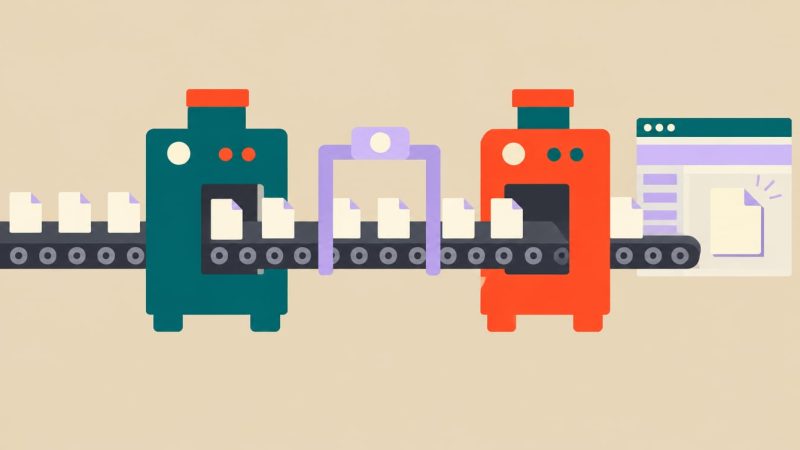
Automated SEO vs manual SEO is not either/or. Software handles repetitive, rule-based work quickly and cheaply, while manual SEO relies on a specialist’s judgement for strategy and quality. For most UK businesses and agencies, a hybrid works best: automate the routine, keep humans in charge of decisions.
It means using software and AI to carry out repeatable search optimisation tasks, such as research, content creation, publishing and reporting, with little manual effort, so sites can publish consistently at scale.
At a glance
- Most cited 2026 guides reach the same verdict: a hybrid of automated and manual SEO works best, automating rule-based tasks and keeping strategy, claims and quality control human, as Pepper sets out.
- A common rule of thumb is to automate the rules and keep the judgement, and to prioritise tasks by hours spent multiplied by how often they recur, according to Ajay Padhy.
- A safe rollout starts with monitoring and baselines, then suggestions only, then a small set of approved changes, says Bemonk.
- SEO typically takes three to six months to build, so regular publishing matters more than one perfect post.
- Rank Otter plans start at £99 + VAT a month for 30 articles and 1 website, and the first article is free with no card needed.
What is the difference between automated SEO and manual SEO?
Automated SEO uses software to do repeatable SEO tasks with minimal human input. Manual SEO is a specialist researching, planning and implementing each step by hand.
The two overlap more than the labels suggest. Most modern tools still need a person to set goals, approve work and read the results. Most specialists use software for crawling and reporting. The real question is who does which job.
| Factor | Automated SEO | Manual SEO |
|---|---|---|
| Speed | Fast, with research, drafting and publishing handled in one flow | Slower, as each task depends on a person’s time |
| Cost | Usually a fixed monthly software fee | Typically a retainer or day rate for specialist time |
| Scale | Easy to publish regularly across many pages or sites | Limited by the hours available |
| Quality control | Consistent on rules, weaker on nuance unless someone reviews | Strong on nuance and accountability |
| Risk | Low-quality or near-identical content if left unchecked | Slow progress and gaps in consistency |
| Best for | Routine, repeatable, checkable work | Strategy, positioning and complex decisions |
Is automated SEO or manual SEO better?
Neither wins outright. Automation wins on speed and cost, while manual work wins on strategy and accountability, so a combination usually performs best.
The biggest mistake is assuming automation fully replaces an experienced person. Software can produce and publish, but it cannot decide what your business should stand for or spot a claim that is wrong for your trade.
Who leans which way
- Small firms with no spare time gain most from automation, with light human approval.
- Agencies with many clients need automation to keep routine work moving across every site.
- Brands with complex strategy should keep specialists in front, and use automation for the repeatable parts.
Consistency matters because SEO typically takes three to six months to build. Publishing regularly beats one perfect post. PS Website Design Ltd, a UK web and app development agency, built Rank Otter. We’ve built and looked after websites for UK businesses since 2009, and we use it on our own clients’ websites.
What SEO tasks can you automate?
Automate repetitive, rule-based, checkable work: monitoring, rank tracking and reporting, crawl checks, schema (the code that describes your pages to search engines), internal link discovery and researched first drafts of articles.
The rule of thumb is to automate the rules and keep the judgement. To pick where to start, multiply the hours a task takes by how often it recurs. A weekly two-hour report beats a once-a-year task that takes longer. Start there.
Publishing and research
Publishing straight to your site saves the copy, paste and format routine that eats time on every article. With Rank Otter, every article is researched from the pages already ranking on Google before a word is written, so drafts start from what is working rather than a blank page.
Roll out in stages
- Observe: set up monitoring and take a baseline.
- Recommend: let the software suggest changes without making them.
- Execute: allow a small set of changes you have approved.
What should you never automate in SEO?
Never hand over strategy, factual claims, brand voice or link decisions entirely, and never mass-produce near-identical pages, which Google treats as spam.
Google’s spam policy targets content produced at scale to manipulate rankings rather than help people. The risks of careless automation include:
- Scaled, low-quality AI content that adds nothing new.
- Blind internal linking that sends readers to the wrong pages.
- False alerts that waste time or trigger needless changes.
Never publish near-identical pages for different towns. If you serve several areas, write something genuinely useful for each. Real photos and real job stories beat stock content every time, and those are things only your team can supply.
How do you combine automated and manual SEO?
Automate the production and routine checks, then keep a human approving what goes live, choosing topics and reviewing results in Google Search Console.
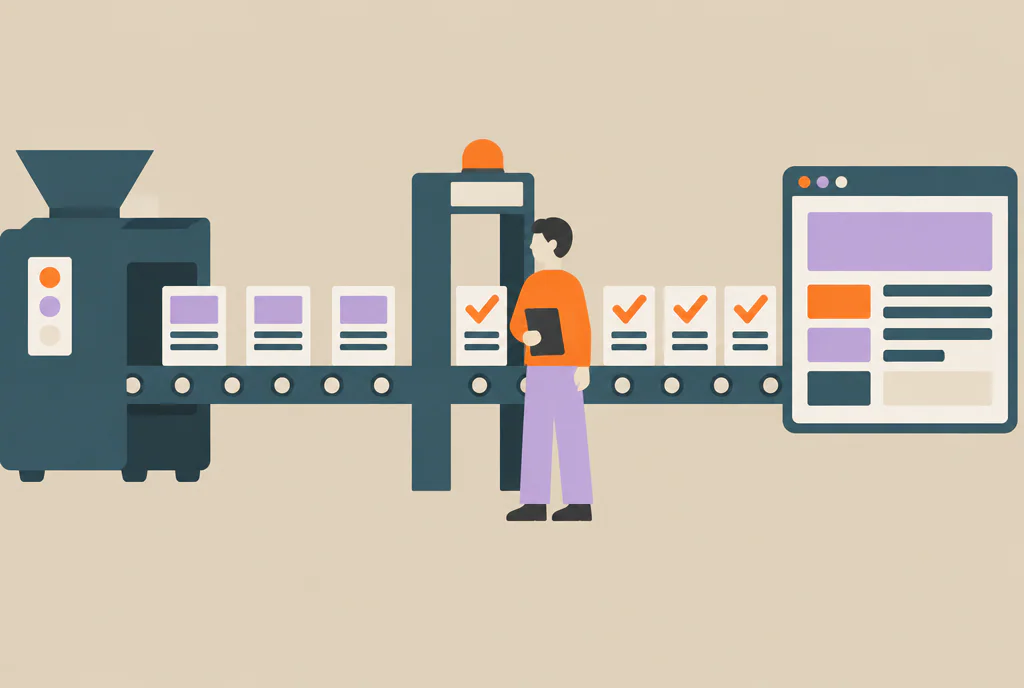
- Take a baseline of where your site stands today.
- Choose topics from the questions your customers actually ask you.
- Approve a plan, such as a 30-day plan in Rank Otter.
- Publish regularly.
- Review results and adjust.
Choose your level of control
With Rank Otter you decide how hands-on to be, from approving every article to full autopilot. Approving each one suits regulated or detail-heavy businesses. Autopilot suits busy owners with a settled plan, or agencies with a trusted process.
Check that your robots.txt file isn’t blocking AI search tools. Then measure from your own Google Search Console, not tool estimates. Rank Otter’s results come from your own Search Console data rather than our estimates. You can see more on the features page.
How much does automated SEO cost compared with manual SEO?
The software side is usually a fixed monthly fee, whereas manual SEO is typically a retainer or day rate for specialist time, so automation costs far less per article.
Our plans are priced in articles a month, not credits or words:
| Plan | Price | Articles a month | Websites |
|---|---|---|---|
| Growth | £99 + VAT a month | 30 | 1 |
| Pro | £199 + VAT a month | 75 | 3 |
| Agency | £449 + VAT a month | 200 | 10 client websites |
Your first article is free with no card needed, and there is a 30-day money-back guarantee on your first payment. Manual SEO costs vary widely with the specialist and the scope, so ask for a clear breakdown before you compare. The Agency plan suits agencies wanting to scale client work. Full details are on our pricing page.
Ready to try the hybrid approach? Enter your website and we will analyse it free in about 30 seconds, then write your first article with no card needed. Contact Rank Otter to get started.
Frequently asked questions
Can SEO be fully automated?
SEO can be largely automated for routine work, but not fully. Strategy, factual checks and brand decisions still need a person, which is why a hybrid works best.
Will Google penalise automated SEO content?
Google’s spam policy targets low-quality content produced at scale to manipulate rankings, not automation as such. Useful, accurate, reviewed articles are the safer route, and near-identical pages should be avoided.
Is automated SEO good for small businesses?
It suits small businesses short on time, because it keeps publishing steady without needing hours each week. Writing about the questions your customers ask keeps the content useful.
How long does automated SEO take to work?
Like any SEO, it typically takes three to six months to build. Regular publishing matters more than one perfect post.
Can agencies use automated SEO for client websites?
Agencies can use automated SEO across client sites to speed up routine work. Rank Otter’s Agency plan covers 200 articles a month across 10 client websites.
Do I still need an SEO specialist if I automate?
A specialist is still valuable for strategy, quality checks and reading results. Automation handles the repeatable tasks so their time goes on decisions.
How do I check automated SEO is working?
Check your own Google Search Console for impressions, clicks and the queries your pages appear for. Give it three to six months rather than judging after a few weeks.