SEO tool comparison for small teams: 2026 UK guide
Compare SEO tools for small teams: what Semrush, Ahrefs, SE Ranking, Mangools and Moz Pro cost, seat limits, and when automation beats more data.


For an SEO tool comparison for small teams, match the tool to your bottleneck. SE Ranking suits value, Semrush breadth, Ahrefs backlinks, Mangools simplicity and Moz Pro beginners. Start with free Google Search Console, then add one paid tool. Is publishing your bottleneck? Then an automation tool such as ours fits better.
At a glance
- Rank Otter Growth plan: £99 + VAT a month for 30 articles and 1 website. Pro is £199 + VAT for 75 articles and 3 websites. Agency is £449 + VAT for 200 articles and 10 client websites.
- Pricing for the main SEO suites varies widely, depending on plan and tool.
- A common pattern in 2026 comparisons: SE Ranking for value, Semrush for breadth, Ahrefs for backlink research, Mangools for simplicity (source).
- Extra user seats and add-ons can push the real cost of Ahrefs, Semrush and Moz Pro well above the headline price (source).
- Google Search Console is the recommended free starting point before paying for any SEO tool (source).
- Rank Otter’s first article is free with no card needed, and there is a 30-day money-back guarantee on the first payment.
What is the best SEO tool for a small team?
There is no single winner. The best choice depends on your bottleneck: whether you lack data or lack time to publish. Here is a verdict by team type.
- Best for value if you want rank tracking and research without a large bill: SE Ranking.
- Semrush: best for breadth, with research, auditing and reporting in one place.
- Ahrefs: best for backlink research and competitor link analysis.
- Mangools: best for simplicity if you want a few clean tools and little to learn.
- Moz Pro: best for beginners who want a gentle start and clear guidance.
- Execution tools such as ours: best when you know what to write but never get it researched, written and published.
Prices for these tools are quoted in US dollars on the vendors’ own pages and change often, so look at the current price before you buy.
Most small teams need one paid tool, not a stack. Three overlapping subscriptions mostly give you three dashboards to ignore.
How do the main SEO tools compare on price, seats and limits?
The table below gives a rough picture of entry pricing, seats and who each tool suits. Treat the figures as a guide checked in October 2026 and confirm them on each vendor’s pricing page, as plans, limits and billing terms move often.
| Tool | Entry price and billing | Seats | Extra seats | Key limits | Best for |
|---|---|---|---|---|---|
| Semrush | Usually one on entry plans | Often paid add-on | Caps on projects, tracked keywords and reports | Teams wanting breadth | |
| Ahrefs | USD, billed monthly or annually (see Ahrefs pricing) | Limited on entry plans | Often paid add-on | Credits and usage limits | Backlink research |
| SE Ranking | USD, billed monthly or annually, usually at the lower end | Varies by plan | Check the plan page | Tracked keywords and projects | Value for money |
| Moz Pro | Monthly or annual, USD | Limited on entry plans | Often paid add-on | Caps on campaigns and keywords | Beginners |
| Mangools | Monthly or annual, USD | Single user on entry plans | Check the plan page | Daily lookup limits | Simple needs |
| Ubersuggest | USD, with monthly or lifetime options | Limited | Check the plan page | Project and keyword caps | Tight budgets |
Seat details vary by plan and change without much notice, so the table keeps them general on purpose. Check the vendor’s page for exact numbers.
What does a team of two or three really pay?
Take a simple example. A team of three on a tool that includes one seat needs two extra seats. If each costs, say, $30 a month, that adds $60 on top of the headline price. Those seat figures are illustrative, not quoted from any vendor, so swap in the real numbers from the pricing page. The point is that seats can add a large share to a cheap plan. Independent pricing research also notes that extra seats and add-ons can lift the real cost of Ahrefs, Semrush and Moz Pro well above the headline price, as this pricing database explains.
Traps for UK buyers
- Currency: prices are in dollars, so your card statement in pounds will move with the exchange rate.
- VAT: check whether the price shown includes VAT. A UK business account may need to add it at checkout.
- Billing basis: annual plans often look cheaper per month but tie up cash for the year.
- Add-ons: extra projects, keywords, reports and seats are charged separately.
Who should not buy each tool
- Semrush: skip it if you will only use rank tracking. You will pay for breadth you never open.
- Ahrefs: skip it if you are not doing link building and want content help.
- Skip SE Ranking if your whole team needs advanced backlink data.
- Moz Pro: skip it if you need deep, wide data on a lot of keywords.
- Mangools: skip it if several people need to work in the same account.
- Ubersuggest: skip it if you need agency-level reporting.
Which free SEO tools should a small team use first?
Start with Google Search Console and GA4, because they show real queries, clicks and conversions for your own site at no cost. Many comparisons, such as this one for small teams, recommend Search Console as the starting point before you pay for anything.
- Google Search Console: shows which searches bring people to you and which pages get clicks. It runs out when you want data about competitors.
- GA4: shows what visitors do after they arrive and which pages lead to enquiries. It tells you little about keywords you are not yet ranking for.
- Google Keyword Planner: gives search volume ideas. It is built for advertisers, so the numbers can be broad.
- Ahrefs Webmaster Tools: shows backlinks and basic site health for sites you own. It does not cover competitor sites.
- AnswerThePublic: shows the questions people ask around a topic. Usage is limited on the free tier.
When to move to a paid tool
Move when you hit a clear wall. Perhaps you need to track rankings across many keywords, study competitors or audit a large site. If you cannot name the wall, you are not ready to pay.
We judge results from your own Search Console data, not tool estimates. Third-party traffic figures are modelled guesses, while Search Console reports what Google actually showed and clicked.
What is the difference between SEO data tools and SEO automation tools?
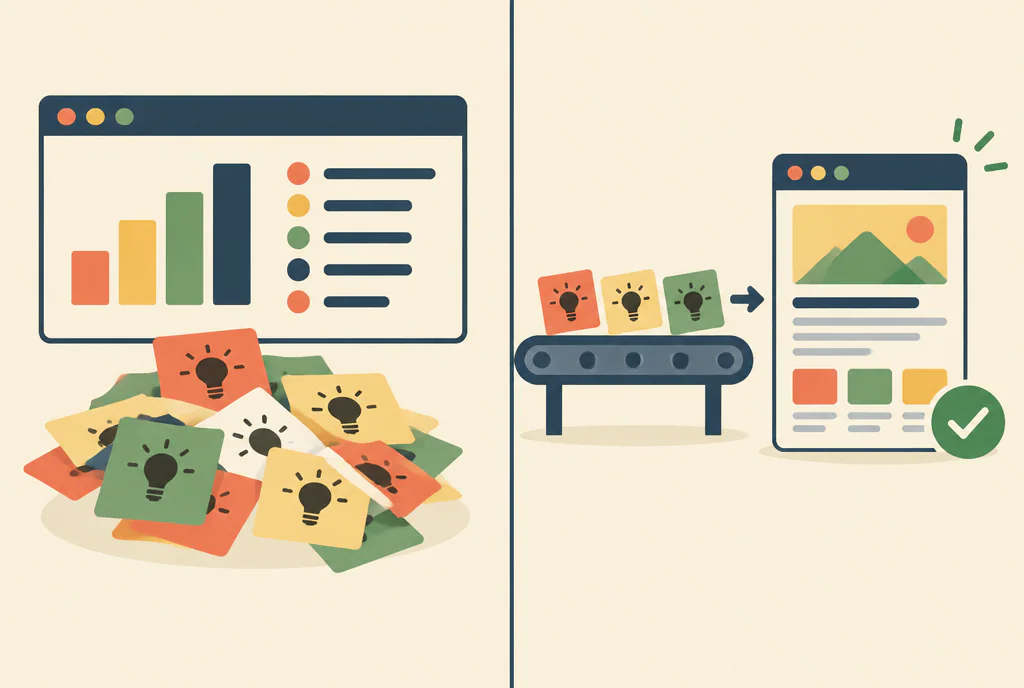
Data tools tell you what to do. Automation tools do the work. For a small team, data tools solve the problem of not knowing where to focus, while automation tools solve the problem of not having the hours to act.
Three kinds of tool
- Research and tracking suites: Semrush, Ahrefs, SE Ranking, Moz Pro and Mangools. They report on keywords, rankings, links and site health.
- Content optimisation tools: Surfer and Clearscope sit here. They score a draft against pages already ranking, but you still write and publish it.
- Tools that research, write and publish: these carry an article from topic to live page.
Most ranking pages on this topic ignore the work-completion bottleneck. They list dashboards and stop there. Yet many small teams already have a long list of keyword ideas and nobody to turn them into pages. More data will not fix that.
Honest trade-offs
- Control: data tools leave every decision with you. Automation hands some of that over, so check how much say you keep.
- Review: automated content still needs a sensible review process, especially for facts and tone.
- Fit: an agency with many clients gains most from automation. A specialist consultant doing link outreach gains more from a data suite.
How does Rank Otter compare for small teams and agencies?
We research each article from the pages already ranking on Google and post it to your site. Plans are priced in articles a month, not credits or words. You can see the product on our features page.
| Plan | Price | Articles a month | Websites |
|---|---|---|---|
| Growth | £99 + VAT a month | 30 | 1 |
| Pro | £199 + VAT a month | 75 | 3 |
| Agency | £449 + VAT a month | 200 | 10 client websites |
How it works
You enter your website and we analyse it free in about 30 seconds. Your first article is written free. No card needed. You then approve a 30-day plan, and articles are researched, written and published on your schedule.
You choose how much control you want, from approving every article to full autopilot. Should you change your mind, you can cancel online in two clicks, and there is a 30-day money-back guarantee on your first payment.
Who is behind it
We build and support Rank Otter at PS Website Design Ltd, a UK web and app development agency that has built and looked after websites for UK businesses since 2009. We use Rank Otter on our own clients’ websites. Our pricing page lists the plans in full.
Where it fits and where it does not
We work best alongside Search Console. We are not a replacement for a backlink or rank-tracking suite, so if link research is your main job, Ahrefs or Semrush will serve you better. If your bottleneck is getting good articles researched and live, that is where we help.
How should a small team choose and get results from an SEO tool?
Pick the tool that removes your biggest recurring bottleneck, then publish consistently. SEO takes three to six months to build, so regular publishing matters more than one perfect post.
A decision list by situation
- Solo marketer: use Search Console, then choose Mangools or SE Ranking if you need keyword data. If writing and publishing eat your week, consider an automation tool instead.
- In-house team of three: work out seat costs first. Semrush or SE Ranking may suit, and a tool like ours can cover the publishing load.
- Agency with several clients: pick a data suite for reporting, and look at an execution tool to keep client sites publishing. Our small business page shows how this works for smaller sites.
Habits that get results
- Write about the questions your customers actually ask you.
- Use real photos and real job stories. They beat stock content every time.
- Check your robots.txt isn’t blocking AI search tools, or assistants may never see your pages.
- Never publish near-identical pages for different towns. Google treats them as spam.
Common mistakes
- Buying a big stack when one tool would do.
- Ignoring seat and add-on costs until the first invoice.
- Judging results too early, before the three to six months SEO needs.
Want to see how this works on your own site? Enter your website with us and we will analyse it free, then write your first article with no card needed. Get in touch with Rank Otter if you would like a hand choosing.
Frequently asked questions
Do small teams need a paid SEO tool?
Not at first. Google Search Console is free and shows real data for your own site. Add one paid tool when you hit a clear limit, such as competitor research or rank tracking across many keywords.
How many users do SEO tools include?
Entry plans often include one or a small number of seats, and extra seats usually cost more. The exact numbers change by plan, so check each vendor’s pricing page before you buy.
Is SE Ranking better than Semrush for a small team?
It depends. SE Ranking is often picked for value, while Semrush is picked for breadth. Choose SE Ranking for a lower bill and core features. Semrush may suit better if you need a wide toolset in one place.
What is the cheapest SEO tool for a small team?
The best place to start is Google Search Console, which is free. Paid suites vary widely in price depending on plan and tool, so compare current prices and watch for seat charges.
Can AI tools write and publish SEO articles automatically?
Yes. Some tools research, write and publish articles to your site. With Rank Otter you choose your control level, from approving every article to full autopilot. We still suggest checking your results in Search Console.
How long does SEO take to show results?
SEO takes three to six months to build. Publishing regularly matters more than one perfect post, so keep going and judge progress from your own Search Console data.
Are SEO tool prices in the UK shown with VAT?
Not always. Many vendors list prices in US dollars, and VAT may be added at checkout for UK buyers. Check the checkout page. Our own prices are stated as £ + VAT.