What is SEO automation? A plain UK guide for 2026
What is SEO automation? Learn what it automates, how it works, the risks, and where human judgement still matters, with a simple workflow and UK advice.

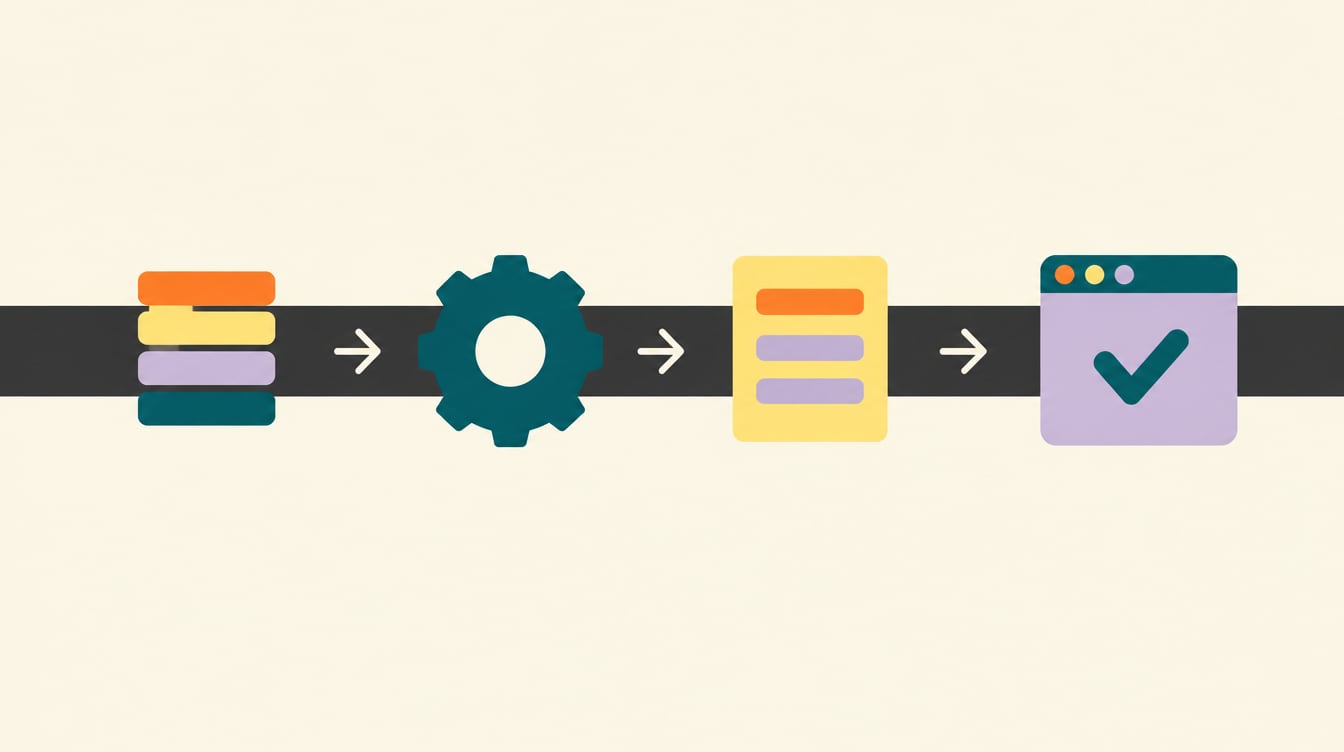
SEO automation is the use of software, AI and automated workflows to run repetitive SEO tasks, such as keyword research, technical audits, rank tracking and reporting, with less manual work. It saves time on repeatable jobs, while people still set the strategy and check quality.
At a glance
- Repeatable tasks such as keyword research, content optimisation, website audits, rank tracking and reporting all fall under SEO automation, as Yoast explains.
- Automation comes in two broad types: traditional rule-based automation and AI-powered automation, as HubSpot describes.
- SEO usually takes three to six months to build, so regular publishing matters more than one perfect post.
- Rank Otter plans start at £49 + VAT a month for 12 articles and 1 website, and the first article is free with no card needed.
- Google’s own SEO Starter Guide is the primary source for how search works and what helps pages get found.
What is SEO automation?
It’s software, AI and workflows doing repeatable SEO tasks to improve your visibility on Google with less manual effort. In simple terms, it means letting a tool handle the boring, repeatable jobs so your team can spend its time on the thinking.
SEO itself is the work of making your website easier for search engines to understand and more useful to the people searching. If you are new to it, Screaming Frog has a clear beginner explanation, and Google’s own SEO Starter Guide is the best primary source for how search works and what helps pages get found.
Automation assists SEO. It does not replace strategy. Someone still has to decide who you want to reach, what you want to be known for and whether the output is any good.
Manual SEO versus automated SEO
| Task | Done manually | Done with automation |
|---|---|---|
| Keyword research | Hours in spreadsheets and search results | Suggestions pulled from data in minutes, then checked by a person |
| Technical checks | Occasional manual crawls | Regular scheduled scans that flag broken links and errors |
| Rank tracking and reporting | Copying figures into a report each month | Dashboards that update on their own |
| Content | Briefing, writing and uploading each post by hand | Research, drafting and publishing handled by a system, with approval if you want it |
| Strategy and quality | Human judgement | Still human judgement |
Which SEO tasks can be automated?
Today you can automate keyword research, content drafts, meta titles and descriptions, broken link checks, technical checks, rank tracking and reporting. Some are safe to leave running. Others need a person to look over the result.
- Keyword research: tools gather search terms and questions at speed.
- Content drafts: AI can produce a first version of an article from a brief.
- Meta titles and descriptions: these can be suggested or written in bulk.
- Broken link and technical checks: scheduled crawls find errors as they appear.
- Rank tracking: we record positions daily or weekly without effort.
- Reporting: figures flow into a regular summary.
- Publishing: finished articles go live on your site on a schedule.
What is safe to automate and what needs a human check
Reporting and technical scanning are low risk, because they collect and present information. Rank tracking is the same. Keyword research is fairly safe too, though a person should judge which terms fit the business. Content drafts, meta descriptions and publishing carry more risk, because a mistake becomes public. We would always want a human check on facts, tone and anything specific to your services.
Where the real data comes from
Google Search Console is the free source of real performance data. It shows which searches bring people to your site, how often you appear and which pages get clicks. Any tool worth using should lean on it rather than on guesses.
Tools fall into a few categories: site auditors, rank trackers, reporting dashboards and general workflow builders such as Make. There are also content tools that research, write and publish. Many agencies use a mix.
How does SEO automation work?
A system collects data, analyses it, produces or fixes something, then publishes and measures the outcome, in a repeating loop. Each pass feeds what it learned into the next.
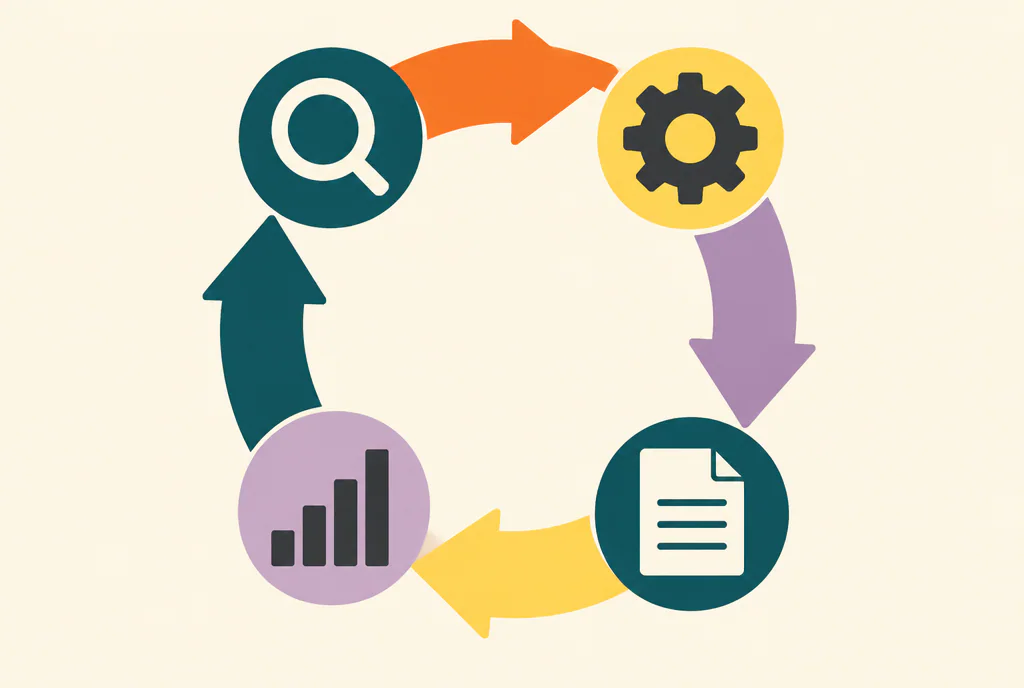
An example workflow for a small UK business website
- Research: find the questions and search terms your customers use.
- Competitor analysis: look at the pages already ranking for those searches.
- Brief: set out the angle, headings and points to cover.
- Draft: write the article from the brief.
- Optimise: tidy the title, description, headings and internal links.
- Publish: put it live on your site on a regular schedule.
- Measure: check Search Console to see what is working, then plan the next piece.
Rule-based versus AI-powered automation
Rule-based automation follows fixed instructions. If a page returns an error, flag it. If a ranking drops, send an alert. It is predictable and good for audits, tracking and reporting. AI-powered automation produces something new, such as a draft article or a suggested title, which makes it far more flexible but also far more in need of checking. The two types, as HubSpot sets out, suit different jobs.
How Rank Otter does it
You enter your website and we analyse it free in about 30 seconds. Your first article is written free, with no card. You then approve a 30-day plan, and articles are researched, written and published on your schedule. Every article is researched from the pages already ranking on Google before a word is written. You can see how it fits together on our features page.
Choosing how much control you keep
You decide the level of control, from approving every article before it goes live to full autopilot. Many people start by approving each one, then loosen the reins once they trust the output.
What are the benefits and risks of SEO automation?
The main benefit is time and consistency. The main risk is thin, repetitive or inaccurate content that can harm your rankings. Both are real, and which one you get depends on how the automation is set up and checked.
The benefits
- Speed: work that took days can take minutes.
- Consistency: articles go out on a steady schedule instead of in bursts.
- Lower cost per article: less manual time per piece.
- Freed-up agency time: your team can spend more hours on strategy and clients.
The risks
- Near-identical town pages: never publish almost the same page for different towns. Google treats that as spam.
- Unchecked facts: AI can state things that are wrong, and a published error reflects on you.
- Generic content: writing that could belong to any business adds little.
- Blocked AI search tools: check your robots.txt file isn’t stopping AI search tools from reading your site.
Our advice
Write about the questions your customers actually ask you. Add real photos and real job stories, because they beat stock content every time. And be realistic: automation does not guarantee rankings. Nobody can promise that, and you should be wary of anyone who does.
Is SEO dead now with AI, and can SEO be fully automated?
SEO is not dead. People still search, and AI search tools still draw on web pages. But SEO cannot be fully automated without quality control, because someone has to check that what goes live is accurate and useful.
Google and AI search tools both still need clear, helpful, well-sourced pages to work from. That is why the basics have not changed. Answer real questions plainly, back up claims and keep your site easy to read. Check that your robots.txt file isn’t blocking AI search tools, or they may never see your pages.
How long it takes
SEO takes three to six months to build. That is why publishing regularly matters more than one perfect post. A steady run of useful articles gives search engines more to find and gives you more data in Search Console to learn from.
What should you look for in an SEO automation tool?
Look for a tool that matches the job, whether that is audits and tracking or content creation and publishing, with real data, quality control and clear pricing. Be wary of anything vague on any of those.
A simple checklist
- Data source: does it research from what is actually ranking?
- Human approval options: can you review articles before they go live?
- Publishing to your CMS: does it post straight to your site?
- Reporting from your own Search Console: are results your real figures, not estimates?
- Pricing clarity: do you know what you will pay each month?
How Rank Otter prices it
Our plans are priced in articles a month, not credits or words, so you know what you are getting. Results come from your own Google Search Console, not our estimates.
| Plan | Price | Articles a month | Websites |
|---|---|---|---|
| Growth | £99 + VAT a month | 30 | 1 |
| Pro | £199 + VAT a month | 75 | 3 |
| Agency | £449 + VAT a month | 200 | 10 client websites |
Your first article is free, with no card needed. There is a 30-day money-back guarantee on your first payment, and you can cancel online in two clicks. Full details are on our pricing page.
Who is behind it
Rank Otter is built and supported by PS Website Design Ltd, a UK web and app development agency that has built and looked after websites for UK businesses since 2009. We use it on our own clients’ websites, so we feel the same pressures you do around quality and time.
If you would like to see what automatic publishing looks like for your own site, get in touch with Rank Otter. Enter your website and we will show you where you stand, with your first article written free.
Frequently asked questions
Is SEO automation safe for Google rankings?
It can be, if the content is accurate, useful and not repetitive. The risk comes from thin or near-identical pages, which Google treats as spam. Keeping a human approval step helps.
Can SEO be fully automated?
Not sensibly. Tasks like tracking and reporting can run alone, but strategy and quality checks still need a person. Full autopilot publishing works best once you trust the output.
How much does SEO automation cost in the UK?
It varies by tool. Our Rank Otter plans are £99 + VAT a month for Growth, £199 + VAT for Pro and £449 + VAT for Agency, priced in articles a month.
Is SEO automation worth it for a small business?
Often, yes, because it keeps publishing steady without eating your week. It works best when you still add real customer questions, photos and job stories.
What is the difference between SEO automation and AI content?
The wider idea is automating repeatable SEO tasks. AI content is one part of it, where AI writes the drafts. Rule-based tools handle audits and reporting without writing anything.
How long does SEO automation take to show results?
SEO usually takes three to six months to build. Regular publishing over that time matters more than any single post, and your Search Console data will show progress.
Do I still need an SEO agency if I automate?
Many agencies use automation themselves to speed up routine work. Strategy, client knowledge and quality checks still benefit from experienced people.