What is topical authority in SEO? A plain guide
Topical authority is how far Google sees your site as a trusted, complete source on one subject. Learn how it works, how to measure it and how to build it.

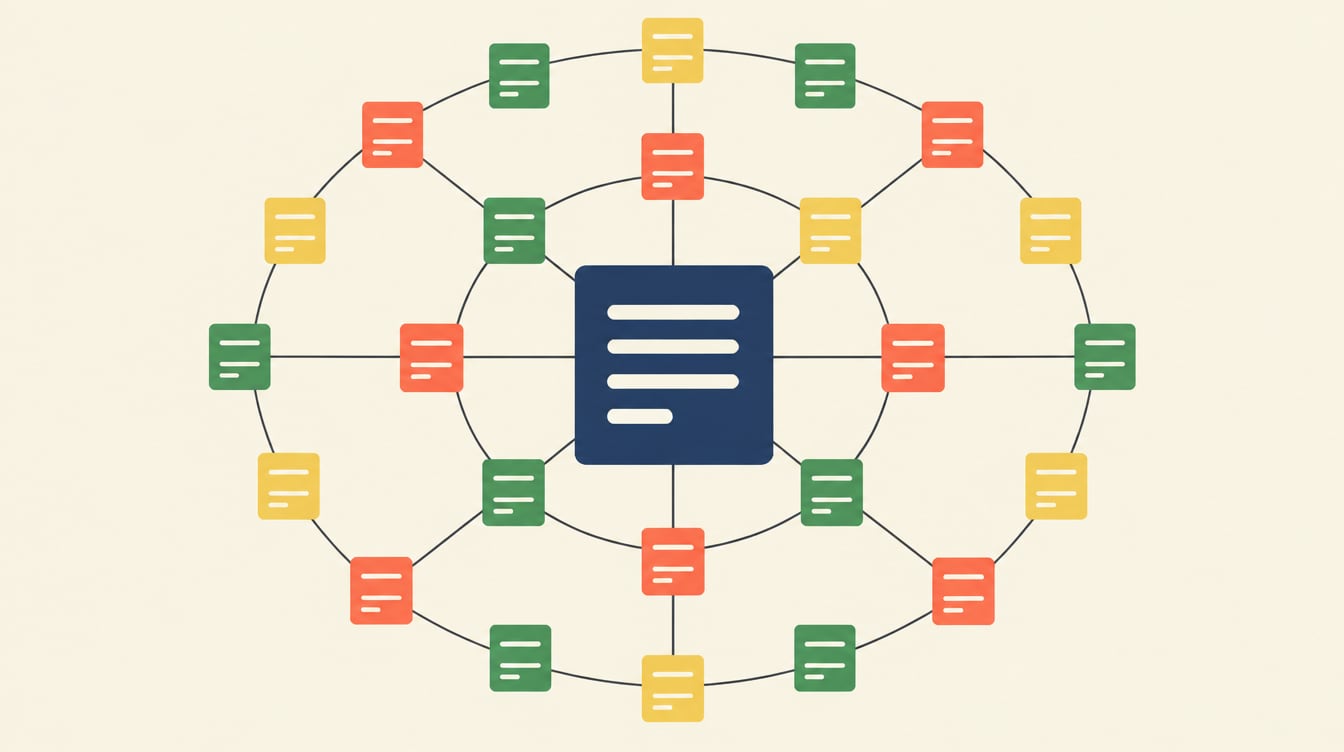
Topical authority in SEO is how far a website is seen as a trusted, complete source on one subject. Instead of ranking one page for one keyword, a site earns topical authority by covering a topic in depth, with linked articles that answer the questions people actually ask, so search engines favour it.
At a glance
- Interconnected content that covers a subject in depth and breadth builds topical authority, not isolated keyword pages (HubSpot).
- Ahrefs describes a build process of topic-based keyword research, mapping clusters and pillar pages, writing the content, building internal and external links, and keeping it fresh (Ahrefs).
- Domain-level scores such as Moz Domain Authority run from 1 to 100 and are third-party metrics, not Google ranking factors.
- Google’s SEO Starter Guide advises grouping topically similar pages together and reducing duplicate content.
- We tell customers SEO takes three to six months to build, so regular publishing matters more than one perfect post.
What is topical authority in SEO?
A site’s recognised expertise and completeness on one subject, shown by interlinked content that covers it from several angles, is what we mean by topical authority. It is the difference between a site that mentions a topic and a site that clearly knows it inside out.
Most small business sites start with single-page SEO. One page targets one keyword, such as “boiler repair Leeds”, and that is the end of it. Isolated keyword articles work the same way: a post here, a post there, none of them connected by a plan. The topical approach flips this. You choose a subject, then cover it so thoroughly that both readers and search engines can see you are the sensible place to find answers.
A worked example: two Leeds plumbing sites
Picture two plumbing firms in Leeds. The first has a single boiler page with a few paragraphs, a phone number and a list of services. The second has the same boiler page, plus 30 linked articles on boilers. They cover how to tell if a boiler needs replacing, what a boiler service involves, why pressure drops and what the different boiler types are. Others explain how to read an error code and how to choose between repair and replacement. Each article links to related ones and back to the main boiler page.
When someone searches a new boiler question, the second site looks like the safer answer. Its pages support each other, it covers the follow-up questions a reader will have, and it gives search engines plenty of evidence that the business really works with boilers. The first site has one page doing all the work.
It is an SEO concept, not a Google score
SEOs use the term topical authority, but Google does not publish a topical authority score for your site. What Google does talk about is expertise, reputation and helpful, people-first content in its guidance on creating helpful, reliable content. In plain terms, this links to E-E-A-T (experience, expertise, authoritativeness and trust): a site that covers a subject fully and shows real experience gives Google more reasons to trust it.
Why does topical authority matter for rankings?
Sites seen as complete on a subject tend to rank new pages on it faster and hold their rankings better, and AI answers tend to cite them. There’s no guarantee, but the pattern is a sensible one to build around.
You rank for more than one keyword
A well-covered topic picks up many related searches. Someone asking “why is my boiler losing pressure” and someone asking “how often should a boiler be serviced” are different searches, but one site can answer both. Over time the whole group of pages lifts, rather than one page carrying everything.
New articles get traction sooner
Once a site has a solid base on a subject, a fresh article on that subject starts from a stronger position. It sits among related pages, gets internal links from them and fits what the site is already known for. Early posts on a brand-new topic? They usually take longer to move than later ones.
Readers trust you more
People who land on one article and see a whole library behind it tend to believe you know your trade. That trust often shows up as better enquiries, because the reader has already learned from you before they get in touch.
AI search favours complete sources
AI search tools and answer engines look for clear, well-organised answers and tend to draw on sources that cover a subject fully. A site with a tidy cluster of articles gives them more to work with than a site with a handful of unrelated posts. We cannot promise any particular citation. Nobody honestly can. Coverage and clarity do improve your chances.
What is the difference between topical authority and domain authority?
Domain authority is a third-party score from 1 to 100 based mostly on links, while topical authority is about subject coverage and trust on specific topics. They sound alike but measure very different things.
| Topical authority | Domain authority | |
|---|---|---|
| What it measures | How completely and credibly a site covers a subject | An estimate of overall site strength, mostly from links |
| Who makes it | No one. A concept, judged by results | Tool vendors such as Moz |
| Does Google use it? | Google talks about expertise and helpful content, but publishes no score | No, it is not a Google ranking factor |
| How to improve it | Publish linked, useful articles across a subject | Earn links from other sites |
Tool scores are approximations
Moz Domain Authority, Ahrefs Domain Rating and the Semrush Authority Score are all metrics built by tool companies to estimate how strong a site looks. They can be handy for comparing sites, and Ahrefs explains the idea in its guide to website authority. They are still estimates, and Google does not use them.
A small site can win on topic
A local firm can have a low domain score and still hold strong topical authority on a narrow subject. Be the most complete source on, say, damp proofing in West Yorkshire homes, and you can outrank bigger sites on those searches. Chasing a higher score blindly, by buying links for instance, can waste money. It also distracts you from the work that actually earns trust.
How can I build topical authority?
Pick one core topic, map the questions around it and publish linked articles regularly. Then keep them fresh. The steps below follow the same shape Ahrefs describes in its topical authority guide: topic research, clusters and pillars, content, links and upkeep.
Step 1: start from what customers ask
Do topic-based keyword research, but begin with real questions. Our advice to customers is to write about the questions their customers actually ask them. Check your enquiry emails, call notes and the things you explain on site visits. Those questions are usually the searches people type.
Step 2: map a pillar page and cluster articles
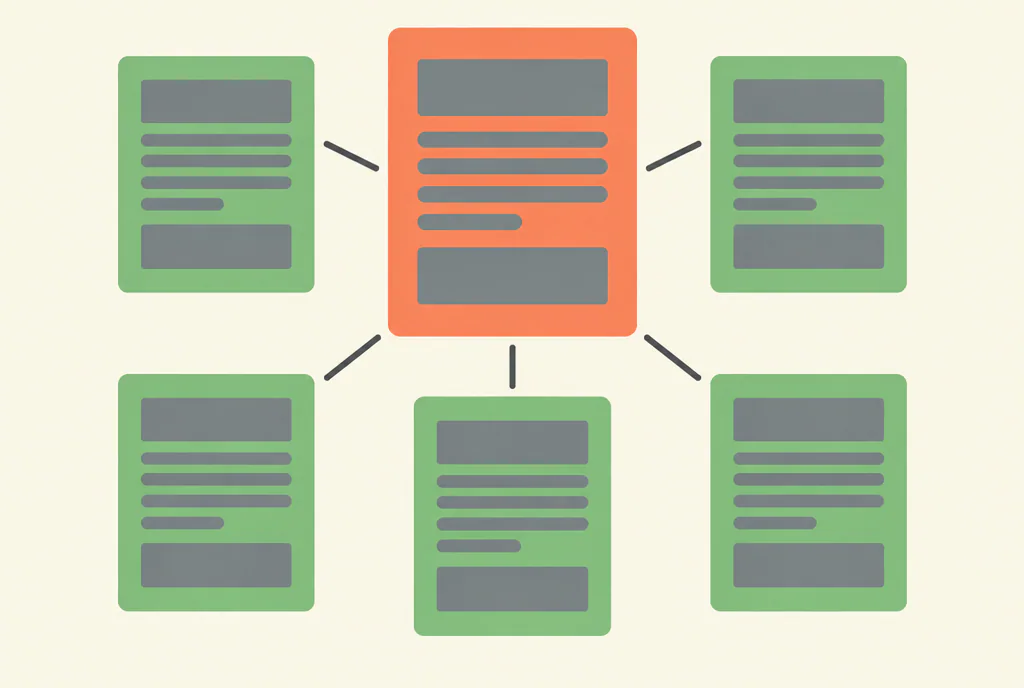
A pillar page is a broad, central page on your main topic. Cluster articles are the narrower pieces that each answer one specific question and link back to it. Sketch this on paper before writing. Decide what to leave out too. A plumber who wants authority on boilers does not need to cover bathroom tiling in the same cluster. Keeping each article to one clear question also helps you avoid keyword cannibalisation, where two of your own pages compete for the same search.
Step 3: write from what already ranks, then add your own detail
Look at the pages already ranking for each question so you know what readers expect and where the gaps are. At Rank Otter, every article is researched from the pages already ranking on Google before a word is written. Then add what only you have: first-hand detail, real photos and real job stories. Customers hear from us that these beat stock content every time.
Step 4: link the cluster together
Link each cluster article to the pillar page and to related articles, using descriptive wording rather than “click here”. Add a few relevant external links to trustworthy sources where they genuinely help the reader. Grouping topically similar pages together is what Google’s SEO Starter Guide advises. Good internal linking makes that grouping visible.
Step 5: refresh and fill gaps
Revisit older posts. Update details that have changed, tighten weak sections and add questions you have since been asked. Look for gaps in the cluster and fill them. Fresh, accurate content is part of the job, not an optional extra.
Two things to avoid and one to check
- Do not publish near-identical pages for different towns. Swapping “Leeds” for “Bradford” in the same text is something Google treats as spam. Where you cover several areas, give each page something genuinely local and different.
- Avoid duplicate content generally. Reducing it is what Google’s SEO Starter Guide advises. One strong page beats three weak copies.
- Check your robots.txt. Make sure it is not blocking AI search tools, or your best content may never reach them.
How long does it take to build topical authority?
It usually takes three to six months of steady publishing to see movement, and longer in competitive niches. That is our honest advice to customers: SEO takes three to six months to build, so publishing regularly matters more than one perfect post.
Consistency beats one perfect post
A single brilliant article cannot show that you cover a subject. Ten solid, linked articles over a few months can. Search engines notice a site that keeps adding useful pages on the same theme, and readers do too.
A realistic rhythm
Choose a pace you can keep up. That might be a few articles a week if you have the capacity, or a few a month if time is tight. A smaller rhythm that never stops is better than a burst followed by silence.
Why a 30-day plan helps
Planning a month at a time keeps the cluster focused. You can see which questions are covered, which are next and how the articles will link up, rather than writing whatever comes to mind. In Rank Otter you approve a 30-day plan before anything is written.
Keeping the schedule going
The hard part is usually staying on schedule. Rank Otter was built by PS Website Design Ltd, a UK web and app development agency. It has built and looked after websites for UK businesses since 2009, and we use it on our own clients’ websites. Articles are researched, written and published on your schedule. You choose the control: approve each one, or let them publish automatically.
How do you measure topical authority?
There is no single official score, so you judge it by rankings and clicks across the whole topic. The best tool for this is free: Google Search Console.
What to look at in Search Console
- Impressions, clicks and average position for the queries linked to your topic. Filter by words in the topic, such as “boiler”, and watch the totals over time.
- The number of cluster queries ranking in the top 10. A growing count is a good sign that your coverage is working.
- Speed of new posts. Do newer articles start to rank faster than your first ones did? If so, your authority on the topic is building.
Treat tool estimates with care
Third-party tools offer topic or authority estimates, and they are fine for a rough comparison. They are still approximations. Check them against your own Search Console data. When we report on results at Rank Otter, they come from the customer’s own Google Search Console, not our estimates.
Can small businesses and agencies build topical authority quickly?
Yes, by narrowing to one subject and publishing consistently, and agencies can run the same approach across several client sites. Speed here comes from focus rather than size.
Start narrow
Own one topic before you widen. A Leeds electrician might begin with consumer unit upgrades and cover every question around them before moving on to rewiring. Use customer questions as your topic source, and the plan almost writes itself. Our page for trades shows how this works for plumbers, electricians and builders.
How Rank Otter works
- Enter your website and we analyse it free in about 30 seconds.
- Your first article is written free, with no card needed.
- You approve a 30-day plan.
- Articles are researched, written and published on your schedule. Approve each one or let them publish automatically.
Everything is on our features page.
Plans priced in articles
Plans are priced in articles a month, not credits or words. Full details are on our pricing page.
| Plan | Price | Articles a month | Websites |
|---|---|---|---|
| Growth | £99 + VAT a month | 30 | 1 |
| Pro | £199 + VAT a month | 75 | 3 |
| Agency | £449 + VAT a month | 200 | 10 client websites |
Your first payment comes with a 30-day money-back guarantee, and you can cancel online in two clicks. To see what a topic plan for your site could look like, get in touch with Rank Otter and we will start with your free site analysis.
Frequently asked questions
Is topical authority a Google ranking factor?
Not as a named score. Google does not publish one. It does talk about expertise, reputation and helpful content, and covering a subject well supports all three.
What is authority in SEO?
Authority is how trusted and credible a site or page looks on a subject. Tools estimate it with scores, but Google does not use those scores directly.
What is topical relevance?
Topical relevance is how closely a page matches the subject a person is searching for. The authority side is wider: it is about how well your whole site covers that subject.
How many articles do you need for topical authority?
No fixed number applies. It depends on how big the topic is and how competitive it is. The aim is to answer the main questions around a subject, then keep filling gaps.
What is semantic SEO?
Semantic SEO means writing around the meaning of a topic, including related terms and questions, rather than repeating one keyword. It fits naturally with building topical authority.
Is SEO dead now with AI?
No. AI search tools still draw on web content, and clear, trustworthy, well-organised pages are what they look for. Also check your robots.txt is not blocking them.
What is a topic cluster?
A topic cluster is a group of articles on narrow questions around one subject, each linking to a central pillar page and to each other.
Is there a topical authority checker?
No official one exists. Some tools offer estimates, but your own Google Search Console data, showing impressions, clicks and positions across a topic, is the most reliable guide.