How to make blog posts quotable by AI and people
Learn how to make blog posts quotable: write standalone answers, back claims with sources, and let AI crawlers in. A practical UK guide with examples.

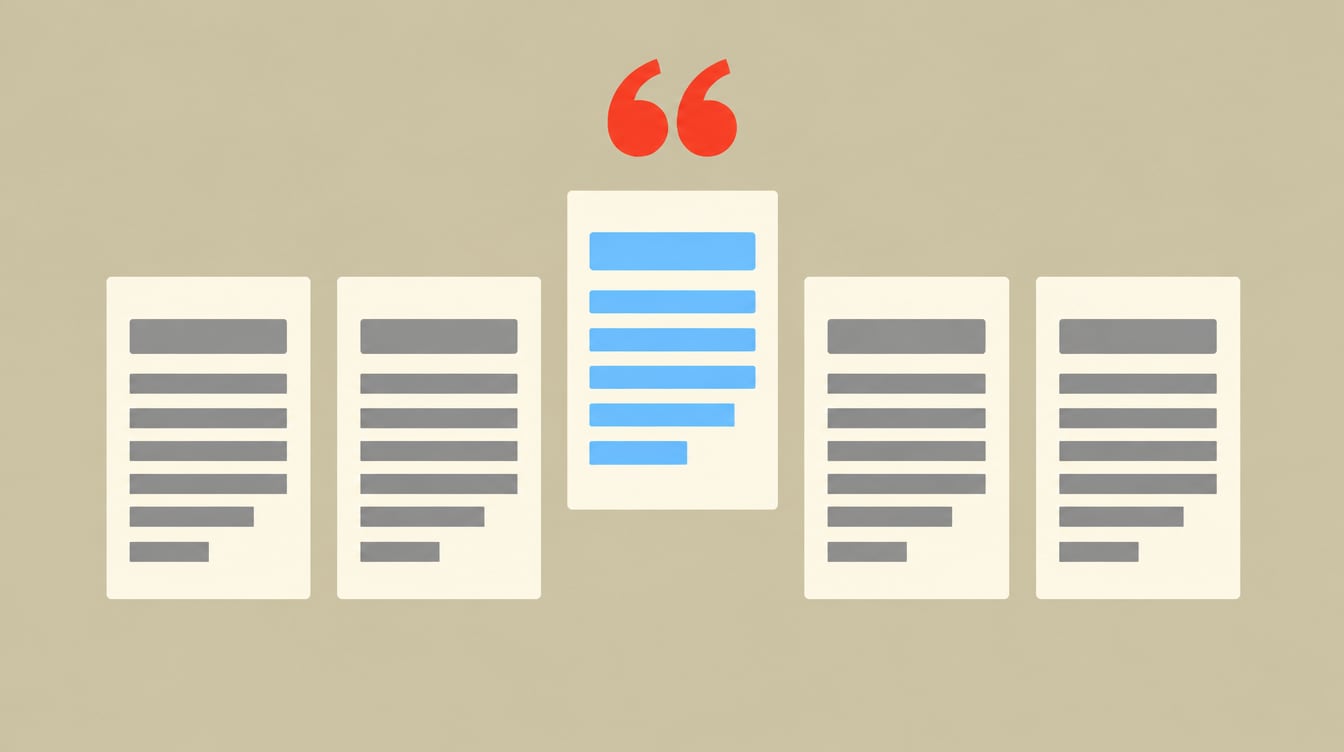
To make blog posts quotable, write each section as a standalone passage that answers one question in its first sentence. Back it with a specific fact or named source. Keep paragraphs short, add dates and an author, and make sure AI crawlers can read the page. A quotable blog post is an article built from self-contained, sourced passages that AI assistants, journalists and other writers can lift and attribute without needing the surrounding text.
At a glance
- AI assistants usually retrieve and quote individual passages from a page, not the whole article, according to Results You Can Measure.
- OpenAI runs separate crawlers, OAI-SearchBot and GPTBot, and each is controlled independently in robots.txt.
- Page text must exist before JavaScript runs, or crawlers may not see it.
- SEO usually takes three to six months to build, so regular publishing matters more than one perfect post.
What makes a blog post quotable?
Passages in a quotable post make complete sense on their own, state a clear claim and can be checked. Each section should work if someone lifts it out and places it in a different document.
Passages, not pages
AI tools pull sections, not whole pages. That means the quality of each section matters more than the flow of the article as a whole.
Two audiences
Quotable writing serves AI search and people. Journalists and bloggers also want a clean, accurate line they can attribute to you.
One honest note: nobody can guarantee being cited. What you can do is remove the obstacles and make your best passages easy to use.
How do you write a section that can be quoted on its own?
Put the answer in the first sentence under the heading, then add one concrete fact, figure or example. Never rely on “as mentioned above” or vague lead-ins.
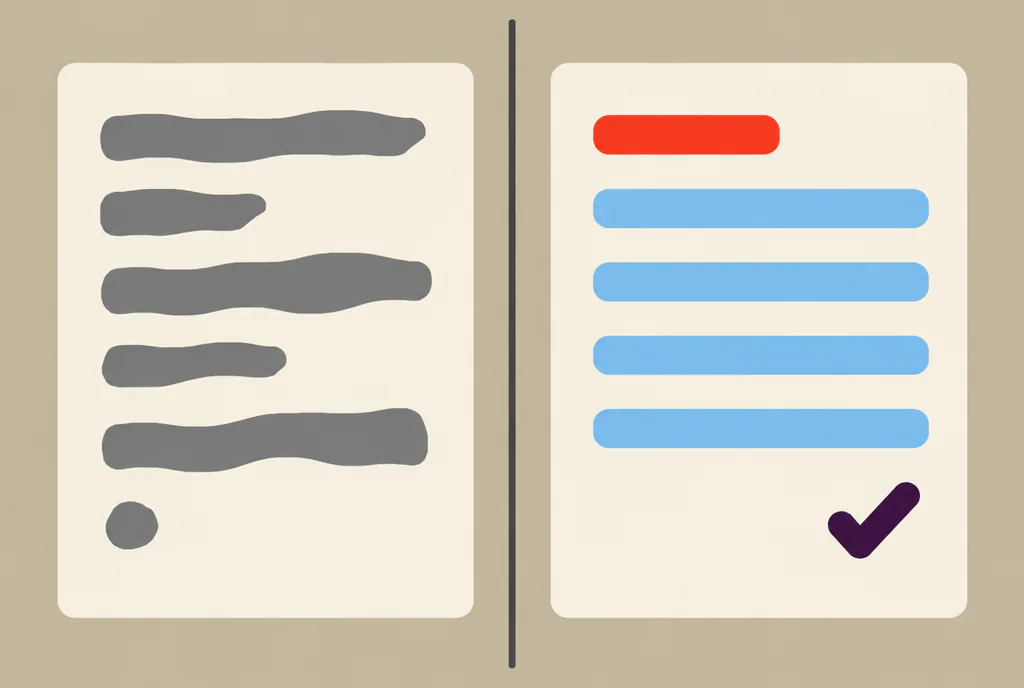
A before and after example
Weak: “As we said earlier, this matters a lot, and it can really make a difference to how things go.”
Stronger: “A quotable section opens with its answer. For example, a plumber’s post on boiler servicing should say in its first sentence how often a boiler needs servicing, then explain why.”
The second version names its subject, makes a claim and gives an example. The first could be about anything.
Name the subject in full
Avoid starting a section with “it” or “this”. A quoted passage loses its surroundings, so the subject has to travel with it.
Keep sections short and focused
Aim for a block of roughly 100 to 200 words per section, covering one question. If a section wanders into a second topic, split it.
Use question headings
Phrase headings the way people search, and check Google’s People Also Ask box for wording. Write about the questions your customers actually ask you, because those are the ones worth answering well.
How do you make claims easy to check and attribute?
Support every key claim with a named source, date or first-hand detail, and show who wrote the post and when it was updated. A reader or a machine should be able to see where a statement came from.
- Statistics: give the source and the year, and leave out any figure you cannot trace.
- Original detail: real jobs, real photos and real results beat generic advice. Real photos and real job stories beat stock content every time.
- Author and dates: add a byline, a published date and an updated date.
- Honesty: say where the evidence is thin. The heyCitation review found structure alone changed citation rates but is open about the limits of that research, and your own writing can be just as candid.
Rank Otter is built by PS Website Design Ltd, a UK web and app development agency that has built and looked after websites for UK businesses since 2009. We use Rank Otter on our own clients’ websites, and the advice here comes from that work.
What format do AI tools and journalists quote most?
Short definitions, numbered steps, ranges and small tables are the shapes most easily lifted. Use them where the content genuinely fits, not to decorate a thin post.
| Quotable element | What to do | Weak version | Strong version |
|---|---|---|---|
| Definition | One plain sentence near the top | “Let’s talk about what this is.” | “An article built from self-contained, sourced passages is what we call a quotable blog post.” |
| Statistic | Name the source and year | “Most people search on mobile.” | “According to [named organisation], [figure] in [year].” |
| Process | Use numbered steps | A long paragraph of “then” and “next” | An ordered list with one action per step |
| Follow-up questions | Add an FAQ block of real questions | “Any other questions?” | A question heading with a short, direct answer |
Put a definition sentence near the top and a key facts box after it. Use numbered steps for any process, and finish with an FAQ of the follow-up questions readers genuinely ask.
Can AI crawlers actually read your blog posts?
Only if your text loads without JavaScript and your robots.txt does not block the crawlers. Check both before changing any wording, because the best passage in the world cannot be quoted if it cannot be read.
- Open yourdomain.com/robots.txt and check it isn’t blocking AI search tools.
- Look for OAI-SearchBot and GPTBot. OpenAI’s crawler documentation explains that each is controlled independently, so you can treat them differently.
- View the page source in your browser and search for a sentence from your article. If it is missing, the text is added by JavaScript and some crawlers may not see it.
- Fix anything that hides the text, such as content that only appears after a script runs.
Schema (structured data that labels page content), FAQ markup and an llms.txt file are helpful at most. None is a substitute for good passages, and the proof that they raise citations is limited.
What should you avoid when writing quotable posts?
Avoid padding, keyword stuffing, near-identical pages and generic AI filler, because they give assistants nothing specific to quote.
- Near-identical town pages: never publish the same page for different towns. Google treats it as spam.
- Stock content: swap it for real photos and job stories.
- Invented evidence: do not make up statistics or fake quotes.
- Waiting for one hit: SEO takes three to six months to build, so publishing regularly matters more than one perfect post.
How do you know if your posts are being quoted?
Track impressions and clicks in Google Search Console, then search your key questions in AI assistants and note when your page is cited. Use your own data, not estimates.
Re-test your target questions monthly and keep a simple log. Where a post nearly ranks, sharpen its opening answer and update the date. The numbers are yours. Rank Otter reports results from your own Google Search Console.
If you want regular, researched posts written in this style and published to your site, see our features or get in touch with Rank Otter. Your first article is free, with no card needed.
Frequently asked questions
How do I quote a blog post in my own writing?
Use the exact words in quotation marks, name the author and site, add the publication or update date and link to the page. Check the wording against the live page before you publish.
How long should a quotable section be?
Aim for roughly 100 to 200 words per section, covering one question. Start with the answer, then add one fact or example.
Does FAQ schema help AI cite my blog post?
FAQ schema may help at most, but the proof is limited. Clear, self-contained answers on the page matter more than the markup.
Should I block GPTBot but allow OAI-SearchBot?
You can, because OpenAI controls the two crawlers separately in robots.txt. Read OpenAI’s crawler documentation and decide based on what each one does for your site.
Are blogs still worth it in 2026?
Blogs are still worth it if they answer real customer questions and are published regularly. SEO usually takes three to six months to build, so patience matters.
Do statistics make a blog post more likely to be cited?
A statistic with a named source and year gives a passage something specific and checkable to quote. No one can promise it will lead to a citation.
How often should I update a post to keep it quotable?
Review key posts whenever a fact, source or price changes, and re-test your target questions monthly. Show the updated date on the page.