What is LLM SEO? A plain-English guide for UK businesses
LLM SEO is optimising your site so ChatGPT, Gemini and Perplexity find, cite and recommend you. Here is how it works and what to do about it.


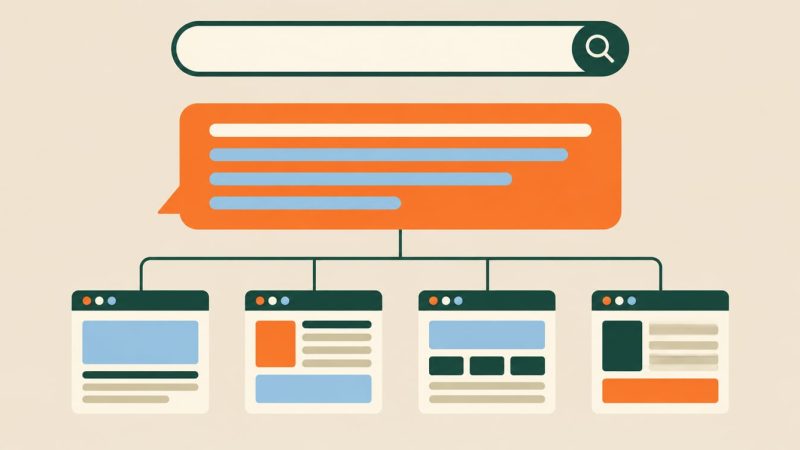
LLM SEO is the practice of optimising your website and wider online presence for large language models such as ChatGPT, Gemini, Claude and Perplexity. The aim is that they can find, understand, cite and recommend your business in their answers. Traditional SEO aims to rank in search results. It aims to get you mentioned in AI answers.
At a glance
- It’s about being discovered, cited and recommended by AI tools such as ChatGPT, Gemini, Claude and Perplexity, rather than only ranking in a list of links (Yoast).
- Google’s official guidance opens by asking whether SEO is still relevant for generative AI search, and tells site owners to apply foundational SEO best practice.
- Search Console now has a generative AI performance report, so visibility in Google’s AI features can be measured.
- Ahrefs recommends “bottom line up front” writing: put the answer first, then the detail (Ahrefs).
- SEO usually takes three to six months to build, so regular publishing matters more than one perfect post.
What is LLM SEO?
The idea is to shape your site and your online presence so AI tools like ChatGPT, Gemini, Claude and Perplexity discover, cite and recommend your business. The goal is to be named in the answer itself, not only to appear in a list of blue links.
The acronym stands for large language model search engine optimisation. A large language model is the technology behind those chat-style tools. It reads a question, then writes a reply in plain language, sometimes with links to the pages it used.
Traditional SEO versus LLM SEO
| Approach | What you are aiming for |
|---|---|
| Traditional SEO | Rank high in Google’s search results so people click through to your site |
| LLM SEO | Be mentioned, cited and recommended in the answers AI tools give |
A Leeds example
Picture an SEO agency in Leeds. A business owner types “SEO agency recommendations” into Google and sees a page of results to scroll through and compare. The same person asks ChatGPT the same thing and gets a short written answer naming a handful of agencies. If your agency is not one of those names, you have lost the lead before the person ever saw your website.
An extension, not a replacement
LLM SEO builds on SEO. It does not throw it away. The pages and the clear writing, plus the trust you build for Google, are the same things AI tools lean on, as the next sections explain.
How does LLM SEO work?
AI tools work out what a question means and fetch current pages from the web when their search feature is on. Then they summarise the sources they trust. Pages that are clear, crawlable and well structured are the ones that get picked.
The steps in plain English
- You ask a question.
- The model works out what you really want to know.
- It retrieves pages that look like good sources.
- It writes an answer, often with citations back to those pages.
Retrieval-augmented generation, without the maths
Retrieval-augmented generation, often shortened to RAG, simply means the model looks things up before it answers. Instead of relying only on what it learned in training, it pulls in fresh pages and builds its reply from them. That’s why your published pages matter. They are the material it can pull from.
Query fan-out
One question is often split into several smaller searches behind the scenes. Someone asking about the best way to get found by AI tools might trigger searches on definitions, tools, costs and measurement. So a page, or a small set of pages, that covers the related subtopics gives the model more to work with than a thin page that answers one narrow point.
Why mentions elsewhere help
Models are more likely to trust a business when several places describe it in the same way. Keep your name, services, location and key facts consistent across your site, your profiles and any directories or articles that mention you. Mentions on other reputable sites add weight to what your own pages say.
What is the difference between LLM SEO, GEO, AEO and AI SEO?
These terms overlap heavily. They all describe the same shift: optimising so AI tools give accurate answers that include you. The differences are mostly about emphasis.

| Term | One-line meaning |
|---|---|
| LLM SEO | Optimising so large language models like ChatGPT, Gemini, Claude and Perplexity can find, cite and recommend you |
| GEO (generative engine optimisation) | Optimising for any engine that generates answers, rather than just listing links |
| AEO (answer engine optimisation) | Optimising so your content is the direct answer to a question |
| AI SEO | A broad label for using or optimising for AI in search work |
Do the labels matter?
Honestly, not much. Many of these acronyms are branding, coined so a service sounds new. The practice underneath is much the same: useful, clear, trustworthy pages that answer real questions.
Which term should you use?
When searching for guidance, try all four terms. Writers use them interchangeably. When briefing a team or a client, pick one and define it once so everyone means the same thing. We tend to say LLM SEO when we mean the AI tools, and plain SEO for everything else.
Is SEO still relevant with AI?
Yes. Google’s own guidance on its generative AI features tells site owners that foundational SEO best practice still applies, and AI tools draw on pages that search engines already index and trust.
What Google’s guidance says
The guidance points to the same basics as ever: helpful, original content that is not just a copy of what everyone else says, and a clear technical set-up so pages can be crawled and understood. There are no special files or tricks that Google asks you to add for its AI features. If someone sells you a secret trick, be wary.
Ranking pages are a main pool
Google is a major pool of material AI tools retrieve from, and it’s the pages that rank well there that get picked up. So the work that gets you ranking also puts you in the running to be cited.
Consistency beats one perfect post
SEO takes three to six months to build. So we tell customers that publishing regularly matters more than one perfect post. A steady run of useful articles builds topic coverage, gives crawlers fresh pages to find and gives AI tools more of your material to pick from.
How do you optimise for LLMs?
Focus on a few practices that matter most. Answer first, cover real customer questions, keep pages crawlable, use clear structure and schema, show real expertise and build mentions elsewhere.
- Lead every section with the answer.
- Write about what customers actually ask.
- Let AI search crawlers in.
- Use clear headings, FAQs and structured data where they fit.
- Show real experience.
- Earn mentions on other sites.
Lead with the answer
Ahrefs describes this as “bottom line up front”. Put the answer in the first sentence or two under each heading, then add the detail. Question-style headings make it easy for a person or a model to see what each part answers.
Write about real customer questions
Start with the questions your customers actually ask you on calls, in emails and at the start of a job. Those are the questions they type into AI tools too.
Check robots.txt
Your robots.txt file tells crawlers what they may visit. Check it is not blocking AI search tools, because a blocked page cannot be retrieved or cited. It takes minutes and is easy to miss.
Use real photos and job stories
Real photos and real job stories beat stock content every time. They show experience that generic copy cannot. They also give readers something worth trusting. Our trades page shows how we think about this for local services.
Avoid near-identical town pages
Never publish near-identical pages for different towns with only the place name swapped. Google treats that as spam. If you serve several areas, write something genuinely different for each, or cover them on one strong page.
Add FAQs and structured data honestly
FAQs and schema help when they match what is on the page. Do not add markup for content that is not there.
Keep facts current
Check dates, prices, opening hours and service details regularly. Out-of-date facts are easy for a model to repeat, and hard to correct once they spread.
How do you measure LLM SEO results?
Measure it with real data: the Search Console generative AI performance report, organic clicks and impressions, and manual checks of what AI tools say about you.
The Search Console AI report
Google’s generative AI performance report in Search Console shows how your site appears in Google’s AI features. Open Search Console, find the report in the performance section and read Google’s help page for exactly what each measure means. You can now track visibility in Google’s AI features. No more guessing.
Check prompts monthly
Write a fixed list of prompts a customer might use, such as “who is the best accountant in Leeds”. Run them once a month in the main AI tools and record whether you are mentioned, and which sources are cited. Using the same list each time lets you spot real change.
Trust your own data
We rely on results from your own Google Search Console, not estimates. Third-party visibility scores can be useful for a rough picture, but your own clicks and impressions are the numbers that matter.
Be realistic about time
Expect three to six months before the picture becomes clear. Judge progress month by month, not week by week.
How can an agency keep up with LLM SEO at scale?
The practical answer is steady, researched publishing across client sites. Automation can handle the research and posting while a person approves what goes live.
Rank Otter does exactly that. Every article is researched from the pages already ranking on Google before a word is written. You choose how much control you want, from approving every article to full autopilot.
Rank Otter is built by PS Website Design Ltd, a UK web and app agency that has built and looked after websites for UK businesses since 2009. We use it on our own clients’ websites.
Plans are priced in articles a month, not credits or words. Our Agency plan is £449 + VAT a month for 200 articles and 10 client websites. Growth is £99 + VAT for 30 articles and 1 website, and Pro is £199 + VAT for 75 articles and 3 websites. There is a 30-day money-back guarantee on your first payment. We do not promise rankings. We give you a steady publishing process and the data to check how it is going.
If you want to see it working, enter your website and we will analyse it free in about 30 seconds. Your first article is free, with no card needed. Get in touch with Rank Otter to try it on one of your own sites.
Frequently asked questions
Which LLM is best for SEO?
There is no single best one. Customers use different tools, so aim to be useful and easy to cite across ChatGPT, Gemini, Claude and Perplexity rather than tuning for one.
Is llms.txt necessary for LLM SEO?
No. Google’s guidance does not ask for any special file for its AI features. Spend your time on clear, helpful pages and a crawlable site first.
What does LLM mean in search?
LLM stands for large language model. It is the kind of AI that reads a question and writes an answer in everyday language, as ChatGPT and Gemini do.
Can small businesses do LLM SEO without an agency?
Yes. The basics are within reach: answer real customer questions, check robots.txt, keep facts current and publish regularly. Our small business page explains how we help if time is short.
How long does LLM SEO take to work?
Plan for three to six months. Regular publishing matters more than one perfect post, so consistency is the thing to protect.
Does LLM SEO replace Google rankings?
No. It builds on them. AI tools retrieve from a main pool of pages that rank on Google, so traditional SEO still does a lot of the work.
Can AI-written content be cited by ChatGPT?
It can be, if it is accurate, useful and easy to crawl. Quality and real expertise matter more than who typed the words, so have a person check what goes live.